Helvella (Elfin Saddles) - click to
expand
Helvella (Elfin Saddles) - click to
expand
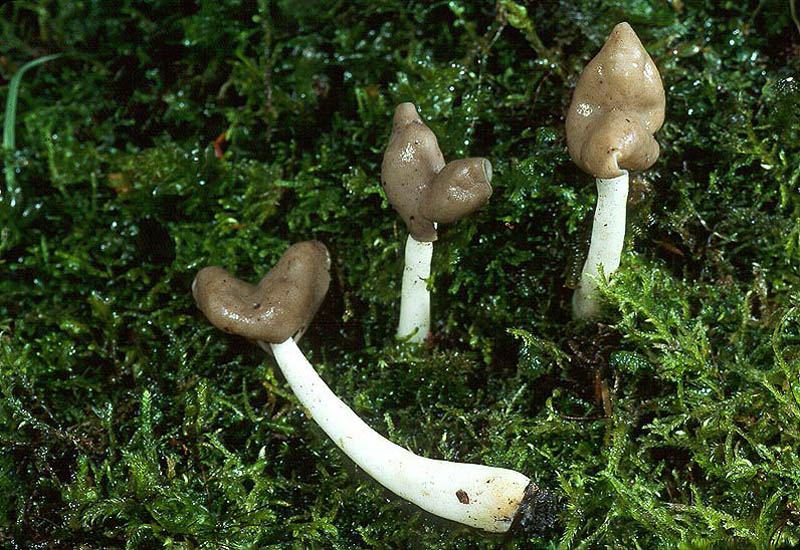
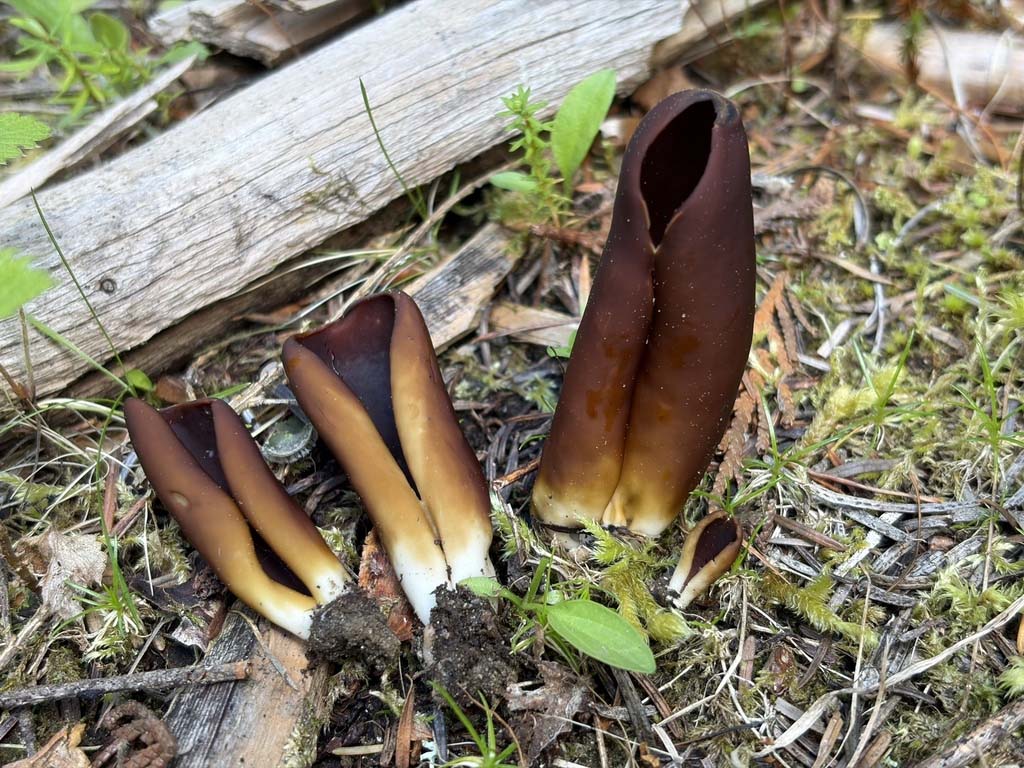
These look like brains or saddles on a stick, a saddle small enough for an
elf to sit on. Gyromitra also
has both forms, but they are usually stockier and orange-brown.
Species mentioned: Helvella albella, atra, bicolor,
capucinoides, compressa, corbierei, crispa, dryophila, elastica, lactea,
latispora, maculata, pezizoides, stevensii, vespertina,
Black and white with fluted stem
Helvella vespertina CA (Helvella
lactea EU misapplied) - black lobed, brain-like cap and a
grey fluted stem. Usually with conifers peaking in the fall. So far,
albino forms have been the same
species, not the white species H. lactea, as originally supposed. The
albino form has to be recognized by the fact that the bottom of the cap fuses
to the stem in places, and underneath the cap is smooth, because
albino versions of H. maculata also exist. We have the holotype sequence.
Helvella
dryophila CA -
very similar, but usually with oaks and peaking in the winter/spring.
Perhaps it a bit more squat and more likely to have a higher contrast in colour
between the cap and stem. We have the holotype sequence. So far, only 5
sequenced collections were this, and 77 collections were H. vespertina.
Helvella sp. 'vespertina-CA01'
- this one typically looks more like H. dryophila (perhaps with a wider
stem) and is similarly found in the winter/spring, but is typically found
with conifers. Collected several times in CA and once in OR.
Helvella atra EU (formerly PNW05)
- The cap of this species is usually more like a black saddle (not lobed
like a brain), also with a fluted stem. However, the cap shape can be convoluted
somewhat like H. vespertina. Found twice in WA in the summertime, although it is a fall
species in Europe and back east where it is more common. Although we don't have
ITS of the epitype, our collections match ITS fairly well of collections that
can be matched fairly closely to the type through other genes.
Note that H. atra
is described with a non-fluted stem. EU sequences matching this are
sometimes labeled H. atra and sometimes H. lacunosa. That tells me that this
mushroom can be found with either a plain or fluted stem, yet will have similar
ITS. This should be investigated. Do other genes show a difference? We need a
sequence of a plain-stemmed collection from the PNW.

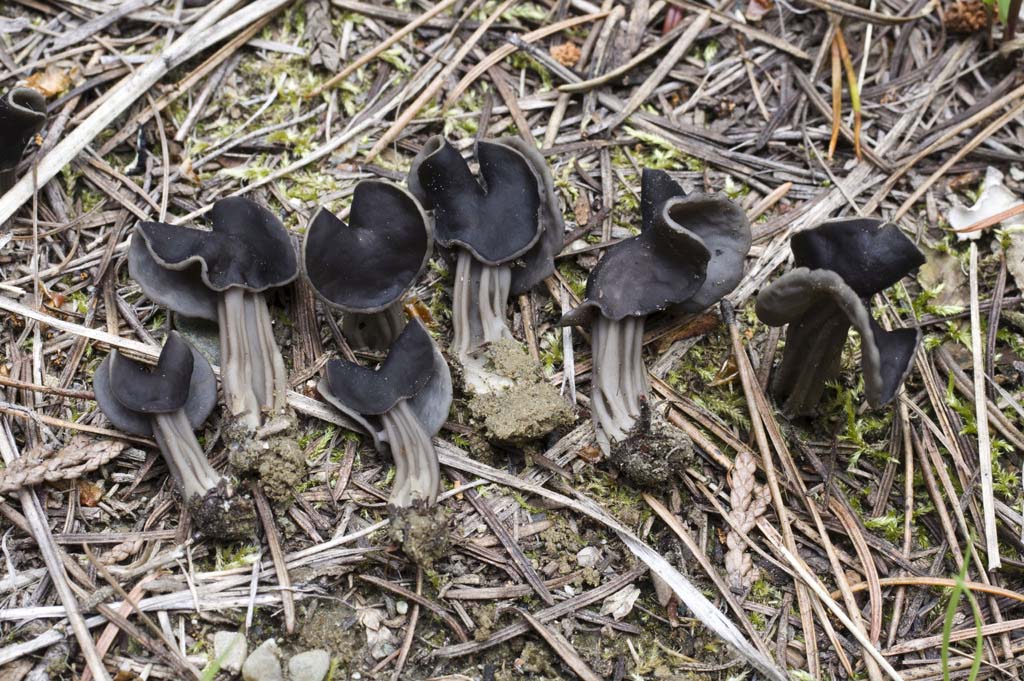
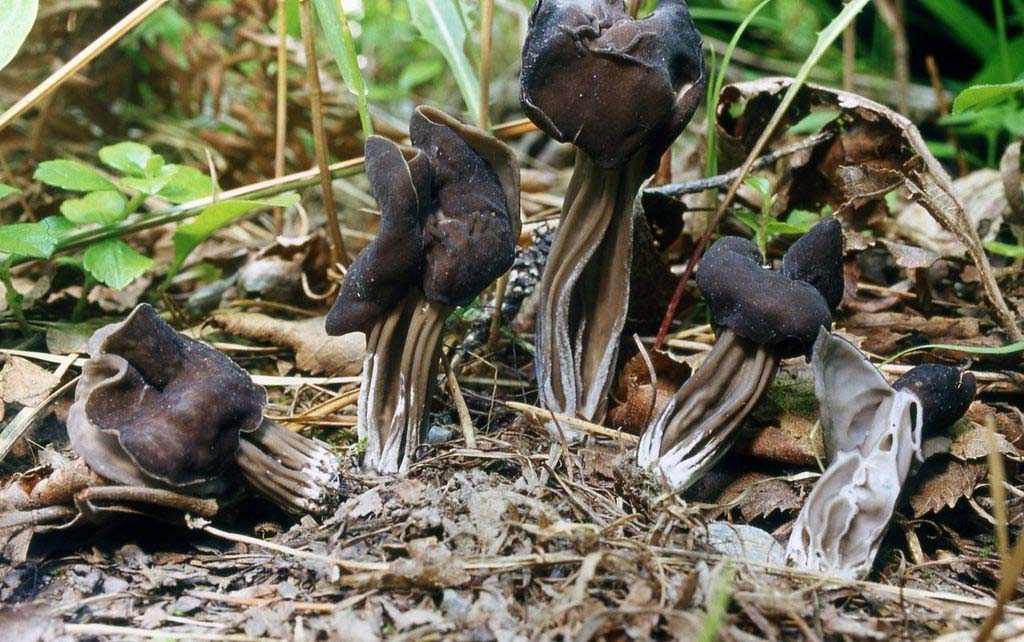
Helvella vespertina © Joe Matanzas, H. atra © Andrew
Parker (2 images)
Brown with fluted stem
Helvella maculata MI/ID (formerly
WA01) -
differs from the H. vespertina group not only in its brown
colours, but the bottom of the cap does not fuse to the stem, and the
underside of the cap is pubescent, not smooth. The cap is not quite as
convoluted as in H. vespertina. It is usually found in the fall
with conifers. We don't have a type sequence, but Skrede provides
sequences that she believes represent this species.
Helvella sp. 'CA11' - a
sister spring species, we are assuming the less rare fall species above is the
real thing because it matches better with the season and trees. CA11
was found once in CA under oak and twice so far in OR in winter/early spring
under unknown trees.
Helvella sp. 'PNW11' -
I don't have any photographs, but this species has been misidentified as H.
maculata and probably looks similar, although it is not a sister species.
One collection seems to have been quite pale as it was identified as H.
crispa. Not much is known about it yet.
Helvella crispa EU - the name used for very pale or
whitish collections of this group, but as it has not yet been found in the
PNW, I suspect some of the three above species have very pale forms just like
H. vespertina does. Save any white collections for sequencing. They will be
recognized by the bottom of the cap not being fused to the stem and by
pubescence under the cap, unlike white versions of the H. vespertina
group.
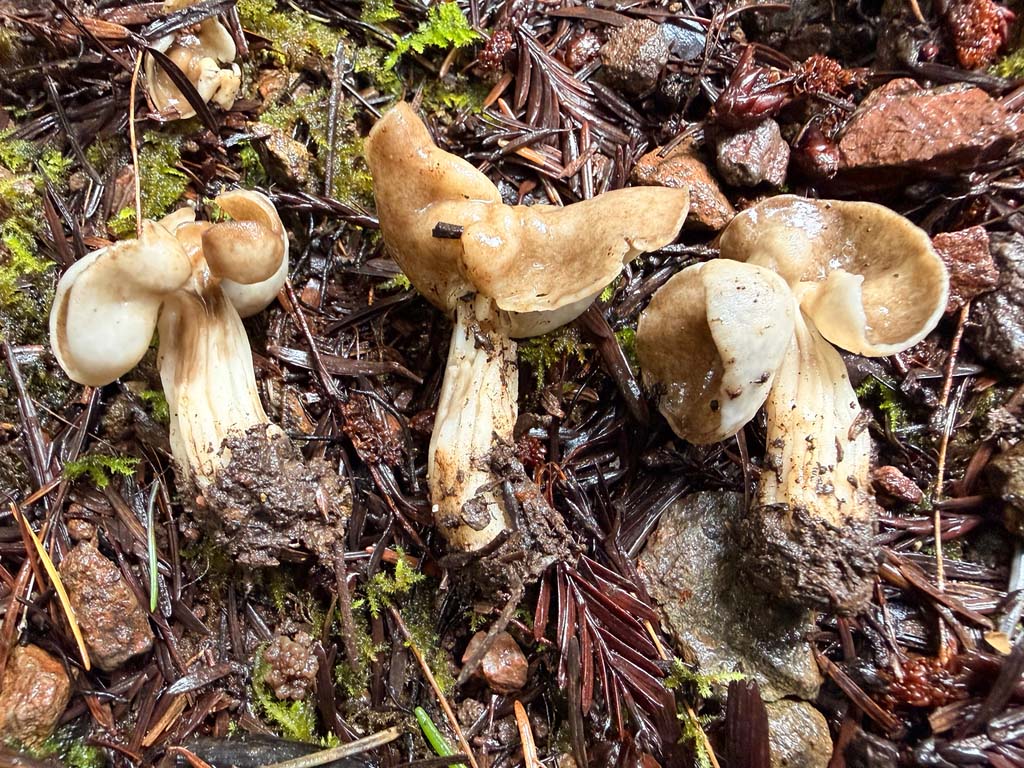
Helvella maculata (from CA) © Yi-Min Wang
Saddle cap on a
normal stem
See my comments on H. atra above. We need collections with
a plain stem.
Helvella compressa WA (formerly CA12)
- 5-10 cm tall, the brown saddle is usually at an actue angle (narrow
'v'). The stem is simple and round, not fluted. The
underside of the saddle is pubescent or hairy and pigmented. The bottom of
the young cap rolls away from the stem. We don't have a type sequence,
but several PNW type area sequences show us what this most likely is.
Helvella sp. 'CA01' - pale
tan, almost white capped compressa-like species, found twice in CA
and once in WA.
Helvella corbierei EU (H.
stevensii MI misapplied, H. latispora EU misapplied) - a miniature
version of the pale CA01, reportedly <2cm tall, also
with a pubescent underside. Small, pale
species have gone by the name H. stevensii/latispora in the PNW, but
neither have been verified. We
need photographed, sequenced collections of H. corbierei. A 2017 study found it in Oregon,
providing sequences of the HSP gene, which I have matched to a different
collection that provides both HSP and ITS, so I believe we have ITS of this
species now.
Helvella pezizoides EU - dark brown cap, cap underside
and stem. The margin is inrolled and underneath the cap is
pubescent. This has been reported from the PNW but we don't have any
sequenced collections yet to see what they are.

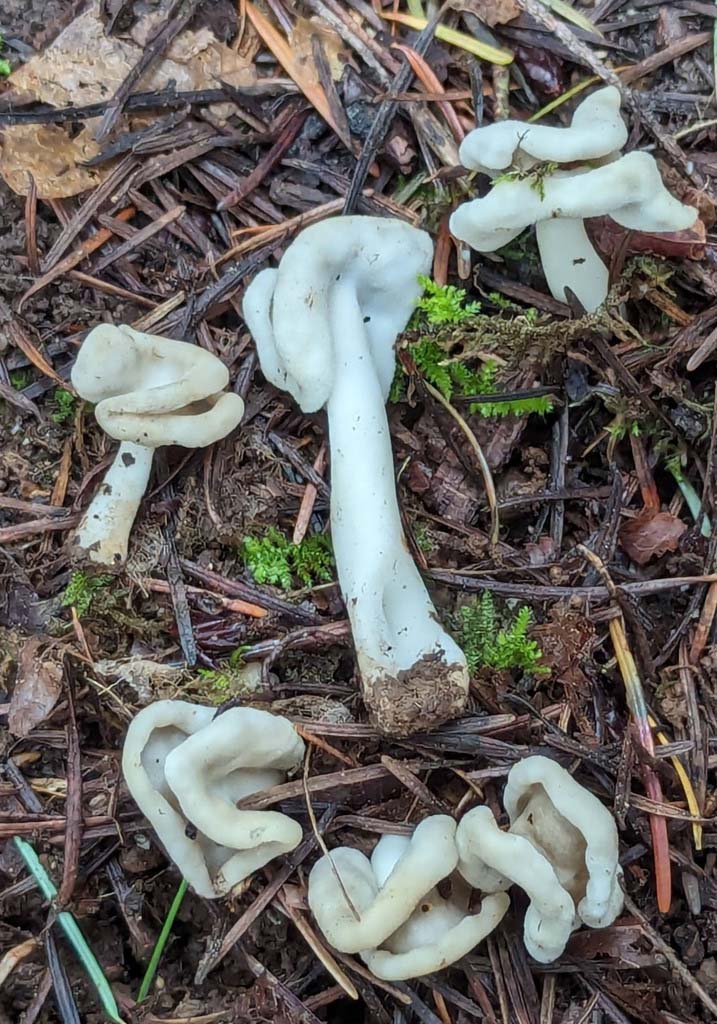
Helvella compressa © Kurtis Willacker, H. sp. 'CA01'
© Michael Beug
Helvella elastica EU
(formerly 'elastica-PNW03') - similar to the compressa group, but
this brown saddle is usually at an obtuse angle (wide 'v'). The
underside of the saddle is smooth and pale. The bottom of the
young cap rolls into the stem. It is found in Europe and the west coast.
ITS was not sequenced of the epitype of H. elastica, but our sequences
match ITS of the EU type area concept that appears to be in the right part of
the tree.
Helvella capucinoides NY (formerly Helvella sp. 'elastica-PNW04') -
the east coast member of this group that has been found once near Victoria, BC
and is to be looked for elsewhere. It may be more grey-brown then H. elastica, and the underside may not be
perfectly smooth. Again, ITS was not sequenced of the official collections, so I
am basing the identity of PNW04 on tree position and by comparing to
Chinese ITS sequences purporting to be H. capucinoides.
Helvella bicolor EU (=H. albella EU)
- slightly smaller than H. elastica, with a dark brown cap that reflexes away from the stem like H.
compressa, but the underside is not as pubescent as in H. compressa, but
perhaps almost smooth underneath like H. elastica. We don't have a
photograph of our only local sequenced collection.
Helvella sp. 'PNW08' -
similar to H. bicolor, photographed once from WA, but I don't know how to
tell them apart yet.
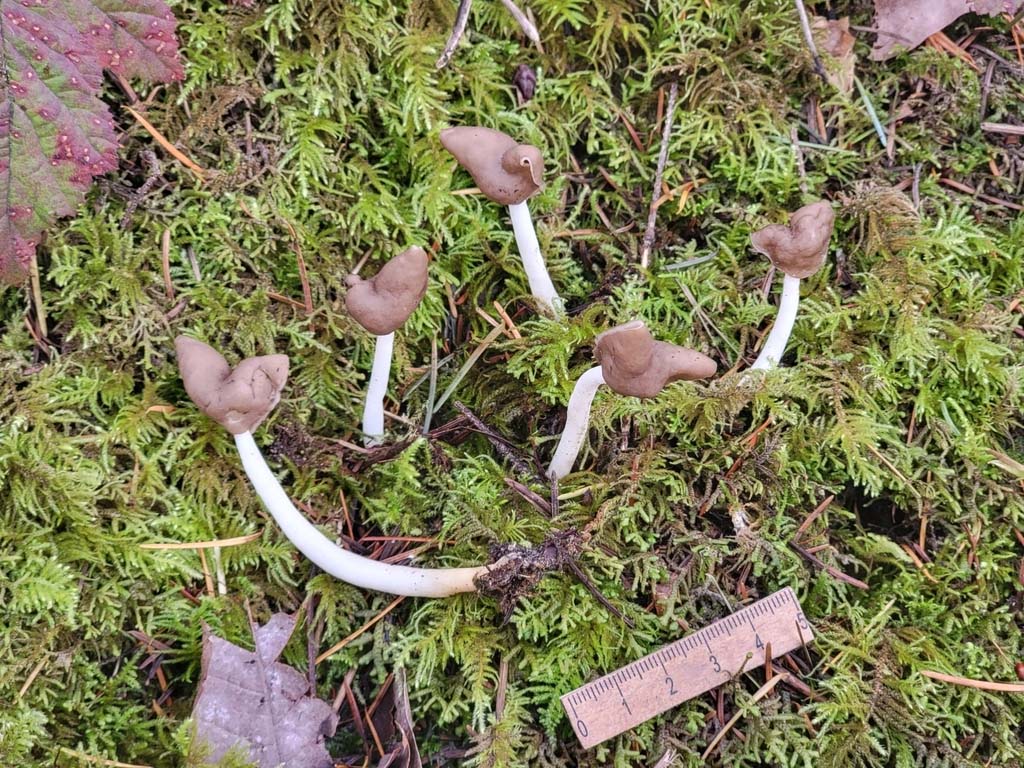
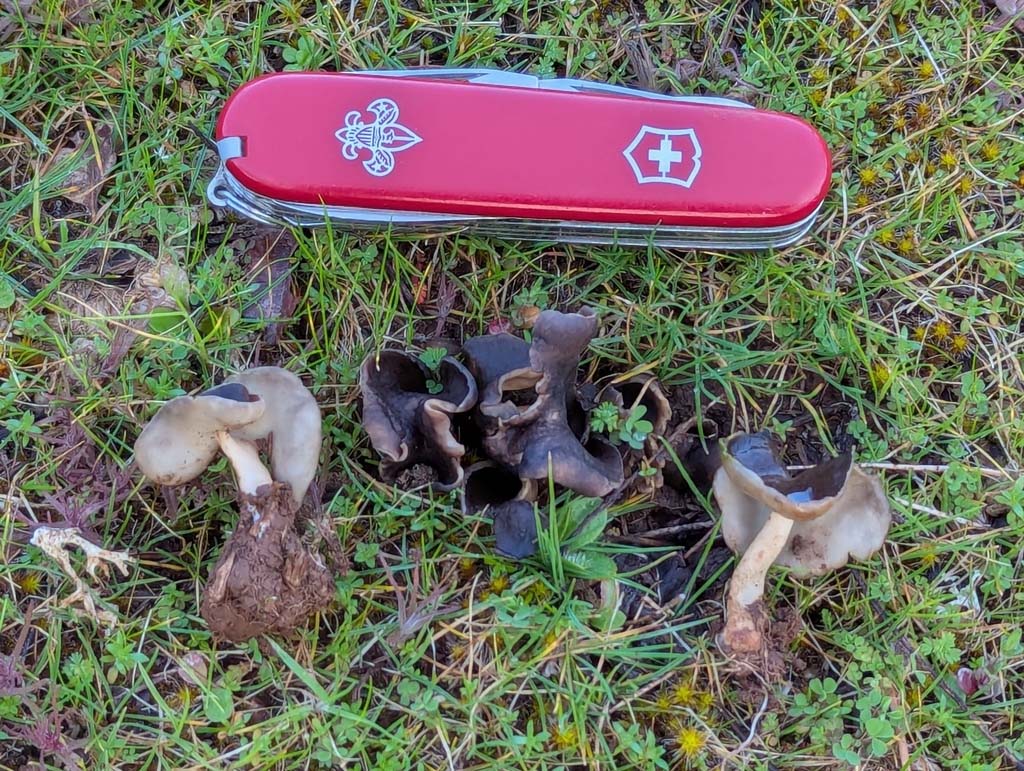
Helvella elastica © Daniel Winkler, H. sp. 'PNW08' ©
Michael Beug